Wild Clay and Historical Connections
- ebhistoricalcerami
- Apr 18
- 2 min read
Updated: Apr 20
While digging and firing clay for a previous project, I discovered that certain clays, when fired with transparent lead glaze, turned green.
Clay collected from Seaham Cliffs turned a buff, pink colour when fired to 1050°C and a buff, yellow when fired to 1100°C and at both temperatures, the glaze became a green shade, though slightly more blue toned at 1050°C.
Clay collected from Southport beach was back after processing, likely due to the coal and oil deposits off-shore and became a dark red with yellow speckles when fired to 1100°C. where glazed with the same lead glaze, it became a green also.

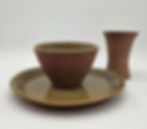
This was incredibly interesting to see as a large amount of historical pottery from the 12th century to the Tudor period is green but the copper oxide/carbonate that it would take to create the colour was quite expensive and would only be splashed on the outside as not to waste it where it wouldn't be seen, especially in the earlier centuries. the more time went on, the more glaze and green was used.
To get results so similar to historical pots simply with a transparent glaze was incredible to get out of the kiln and added a new layer to this research.
The lead in the glaze acts as a flux to the clay body, liquifying a thin layer on the surface and making that part of the glaze. This could explain the green of the 1100°C fired Seaham clay as its yellow shade could become a greenish shade but does not explain the Southport clays transformation from red to green. There is a small amount of bubbling under the surface of the glaze of the Southport clay, which could indicate some kind of gassing that could have occurred during the firing but I may have to do a chemical analysis of the ceramic to find out what could cause such a reaction.
I do believe that most historical green glazes were made with Copper oxide or carbonate but there are some, especially early examples that have a similar looking clay body and shade to the Seaham clay that I think that it could be a connection. However, with historical kilns being wood fired usually and having different atmospheres and that will have effected the results of the glazes and clays in ways that I cannot replicate in a oxidization kiln.
Either way, it made my work that much more interesting and I feel, adds another layer of visual and historical interest to my pieces from this project.
-Ella Scott